Black Friday presents a familiar dilemma for luxury and premium brands. The demand is there, customers are actively shopping, and competitors are competing for attention. But joining the race to offer the biggest discount can create a problem that lasts long after the weekend ends.
For brands built on craftsmanship, quality and exclusivity, price is part of the proposition. Frequent markdowns can encourage customers to question the value of full-price products or delay purchases until the next promotion. Yet ignoring Black Friday completely means potentially missing an important opportunity to engage customers during the peak trading period.
The answer is not necessarily to sit out the event. It is to approach it differently.
Luxury brands can create compelling reasons to purchase without reducing product prices. Exclusive product access, considered gifting, personalisation, loyalty rewards and premium services can make the buying experience more valuable while protecting the brand's positioning.
For Shopify and Shopify Plus brands, the opportunity extends beyond the campaign itself. A well-planned Black Friday strategy can strengthen customer relationships, encourage larger baskets and create momentum for the wider festive season without making discounts the centre of the customer proposition.
Should luxury brands participate in Black Friday?
There is no single answer for every premium brand. The decision depends on your positioning, customer expectations, margins, inventory and wider commercial objectives.
For a brand whose appeal rests on rarity, craftsmanship or a carefully controlled price position, a sitewide discount can undermine the very qualities that justify its price. A customer who sees the same product repeatedly marked down may begin to question whether its original price represents genuine value.
That does not mean every promotion damages a luxury brand. A carefully designed offer can attract attention, reward loyal customers or support a specific commercial objective. The important distinction is between participating strategically and copying the discount mechanics of the wider market.
Instead of asking, "How much should we take off?", consider a different question: What can we offer that makes buying from us more valuable without changing the price of the product?
That shift creates room for campaigns that feel consistent with the brand rather than a temporary departure from it.
1. Offer exclusive access instead of lower prices
Exclusivity is already central to many premium brands. Black Friday can provide a reason to make that exclusivity tangible.
Rather than opening a sitewide promotion to everyone, consider giving existing customers first access to a new collection, a limited product release or a carefully curated seasonal selection. The benefit is access itself, not a reduced price.
A private launch can also help a brand build its email and SMS audience. Customers can register to receive early access, while existing customers may be invited through a dedicated loyalty or CRM segment.
The key is to offer something genuinely worth accessing early. A standard product catalogue hidden behind a password is unlikely to feel special. A limited colourway, an exclusive product variation or first access to a sought-after collection gives the invitation a clear purpose.
Creed's UK online boutique shows how this can work year-round, not only at peak. Its newsletter sign-up promises subscribers private early access to new launches, alongside the latest news from the house. Its FAQs also note that complimentary gifts may be offered to loyal customers with full-price purchases. Positioning access and recognition as standing benefits means a Black Friday invitation feels like a continuation of the relationship rather than a one-off sale.
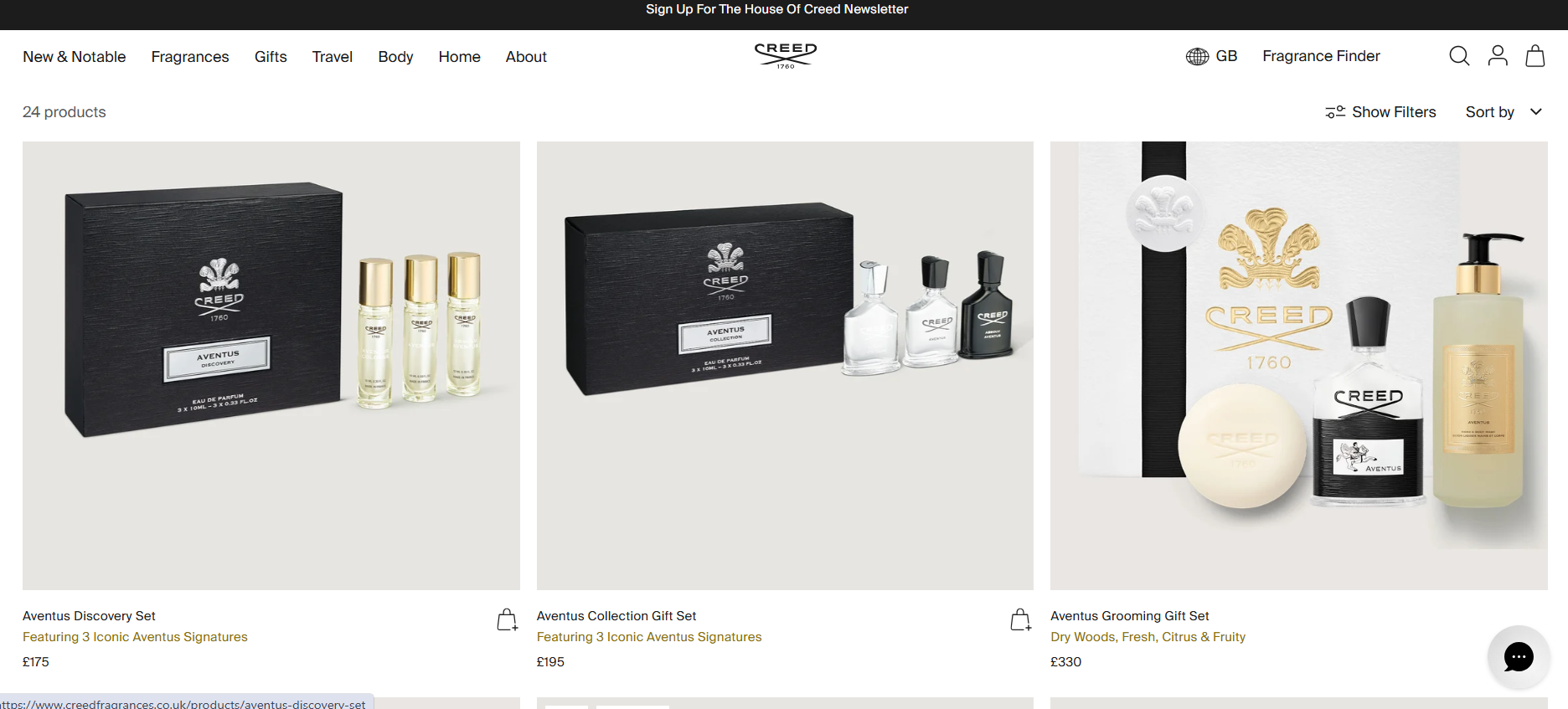
Shopper research supports the approach. LoyaltyLion's Loyalty in 2026 report, based on a Censuswide survey of 4,000 UK and US eCommerce loyalty members, found that 66% consider early access to new products an important loyalty benefit and 75% value early access to sales. Discounts still ranked highest at 88%, so access works best as part of a considered mix of benefits rather than as a like-for-like replacement for a price cut.
How to implement it: Create a dedicated landing page explaining the benefit, make the registration process straightforward and ensure eligible customers receive access at the promised time. Use email and SMS to build anticipation without resorting to relentless countdowns or aggressive promotional language.
Keep the experience consistent with the brand. A premium invitation should feel considered and personal, not like a conventional sale email with different wording.
2. Add value through considered gifting
Gift-with-purchase campaigns offer another way to encourage sales without reducing the price of the main product.
The most effective gifts complement the brand and feel desirable in their own right. Depending on the category, this could mean a fragrance discovery set, a complimentary accessory, premium gift packaging, a product-care kit or a small item that introduces customers to another part of the collection.
The important point is perceived value. A generic freebie may do little for a premium customer, whereas something useful, beautifully presented or exclusive to the campaign can enhance the purchase experience.
Luxury fragrance houses use this approach regularly, both in their Black Friday campaigns and in the run-up to the festive season.
Jo Malone London is running a current example on its UK site. Until 31 October 2026, customers who spend £150 receive a complimentary Trio of Treats in a tartan pouch: a 9ml bottle of the new limited-edition Tangerine & Honey Cologne, a 30ml Myrrh & Tonka Body & Hand Wash and a 10ml Lime Basil & Mandarin Hand Cream. The brand pairs this with complimentary engraving and charms on 100ml colognes and signature gift wrapping on every order.
The gift is doing more than adding value. It puts a new limited-edition scent into customers' hands and introduces them to bath, body and hand care alongside cologne. That makes it a discovery mechanism as much as an incentive. It is worth noting that the same page also offers a 15% saving on two full-size home fragrances, so this is a gift-led autumn promotion rather than a strictly discount-free one.
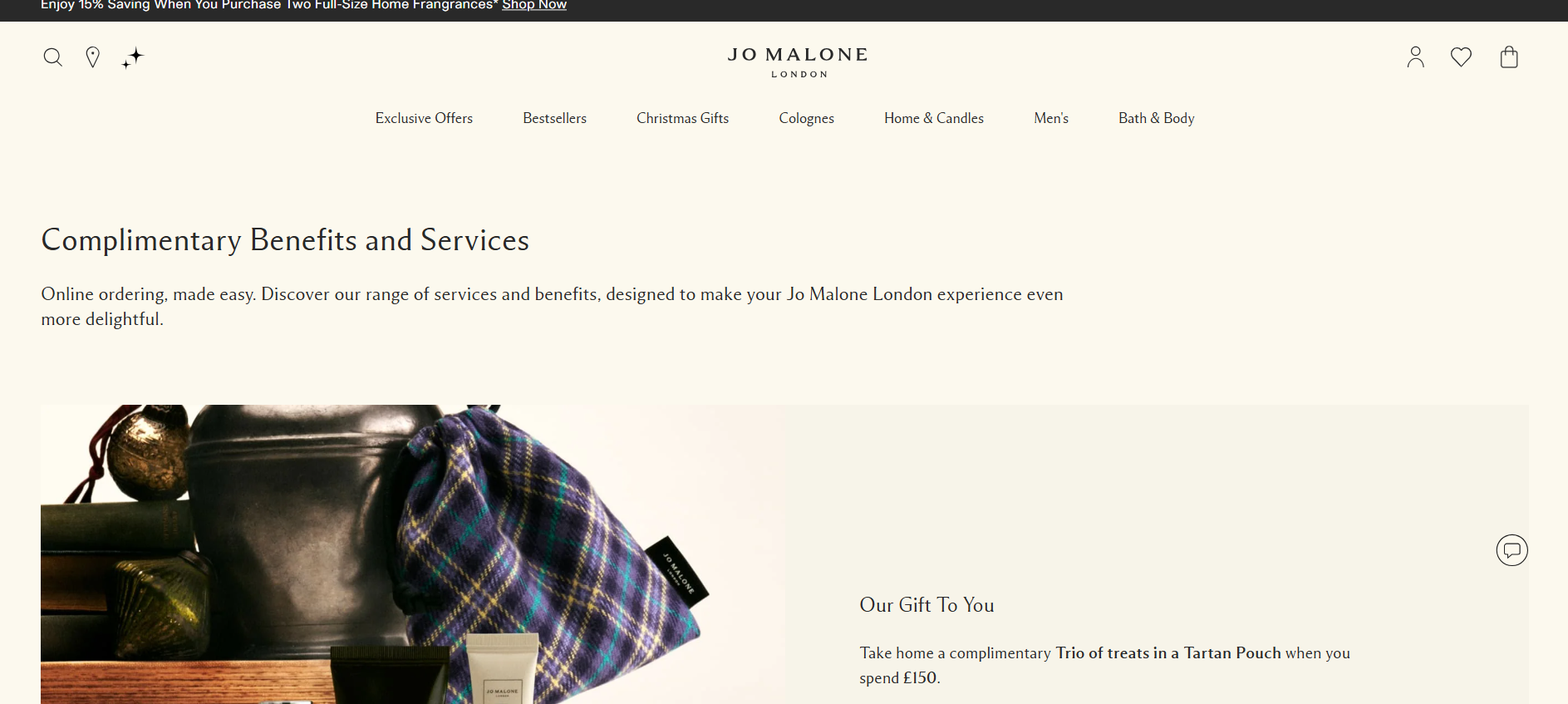
The takeaway is that a complimentary product can feel aligned with a luxury brand when it reinforces discovery, craftsmanship or the pleasure of the purchase.
Before launching a similar offer, model the cost carefully. Consider the gift's landed cost, fulfilment, stock availability and qualifying spend. A threshold that encourages a worthwhile increase in basket value can support profitability; one that simply adds cost to orders customers would have placed anyway may not.
3. Turn gifting into a premium service
Black Friday coincides with the start of the festive shopping period, making gifting a natural opportunity for premium brands.
Customers are not always looking for the cheapest product. They may need help finding the right gift, choosing between products or ensuring that an order arrives on time and in a presentation worthy of the occasion.
Brands can respond with curated gift edits, product recommendations by recipient or occasion, complimentary gift wrapping, personalisation or a dedicated gifting consultation.
For a luxury homeware brand, that could mean a curated selection for first homes or considered gifts for design enthusiasts. A fashion label might make it easier to shop by style, occasion or recipient. A beauty or fragrance brand could guide customers through discovery sets before they commit to a larger purchase.
Tiffany & Co. is a well-known illustration of service-led gifting. Every purchase arrives in its signature Blue Box tied with a white satin ribbon, with a gift message option at checkout. Its holiday services and gifting pages also promote complimentary shipping and returns, engraving and embossing, one-to-one gifting appointments in store or online, and clear delivery cut-offs, including an earlier deadline for engraved orders. None of these change the price of the jewellery. They make the purchase easier, more personal and more reassuring for someone buying a gift under time pressure.
The experience should remove uncertainty rather than add another layer of marketing.
What to prioritise: Make gift options easy to find, communicate delivery cut-offs clearly, explain personalisation choices and ensure the checkout handles gift messages or packaging without unnecessary friction.
These improvements can remain useful well beyond Black Friday. They help customers shop more confidently throughout the festive season, while allowing the brand to differentiate through service rather than price.
4. Reward loyalty without training customers to wait for a sale
Black Friday is not only an acquisition opportunity. It can also be a moment to strengthen relationships with customers who already know and value the brand.
Rather than offering the same incentive to everyone, consider what would make existing customers feel recognised. Depending on your business model, this might include private access to a collection, invitations to an event, priority access to limited stock or a personalised product recommendation.
The benefits should reflect the customer's relationship with the brand. A high-value repeat customer might receive access to a private consultation, while a newer customer could be introduced to a carefully selected product edit.
The technology behind the experience matters. Shopify customer data, loyalty platforms and email automation can help brands identify eligible customers, communicate benefits consistently and measure engagement.
Harrods structures its loyalty programme around tiers that unlock access and service as customers spend more each year. Every member earns points on purchases, with 500 points worth £5, and higher tiers earn points faster. The most valuable benefits, however, are not price-based. According to the programme's terms and conditions, Black Tier members, who spend at least £10,000 a year, gain access to Harrods' Personal Shopping service, while Platinum members spending £50,000 or more can apply for private shopping at The Penthouse.
For luxury brands, the principle is particularly relevant: loyalty should feel like recognition, not simply another mechanism for distributing discounts.
5. Use limited editions and exclusive product moments
Some brands can create a reason to buy through the product itself.
A limited-edition design, a seasonal colourway, a collaboration or the return of a popular product can create interest without changing the price of the core collection. It allows the brand to participate in the cultural moment while maintaining its usual pricing approach.
This strategy is best suited to brands with a clear product identity and the ability to create genuine differentiation. Artificial scarcity is unlikely to build trust, particularly if customers repeatedly see supposedly limited products restocked without explanation.
The exclusive element should be real. That might mean a genuinely limited production run, a colour available only through the brand's own store or a curated collection assembled specifically for the gifting season.
Liberty London has turned a single seasonal product into one of the most anticipated launches of the festive calendar. Its 2026 Beauty Advent Calendar costs £285 and contains 29 products, 21 of them full size, which Liberty values at over £1,300. Twenty calendars also contain a golden ticket worth £1,000 to spend at Liberty. According to Liberty, the calendar has sold out 11 years in a row, and this year customers could join a waitlist and pre-order before the official launch in early September. Country & Town House reported that 26 of the products are exclusive to this year's countdown.
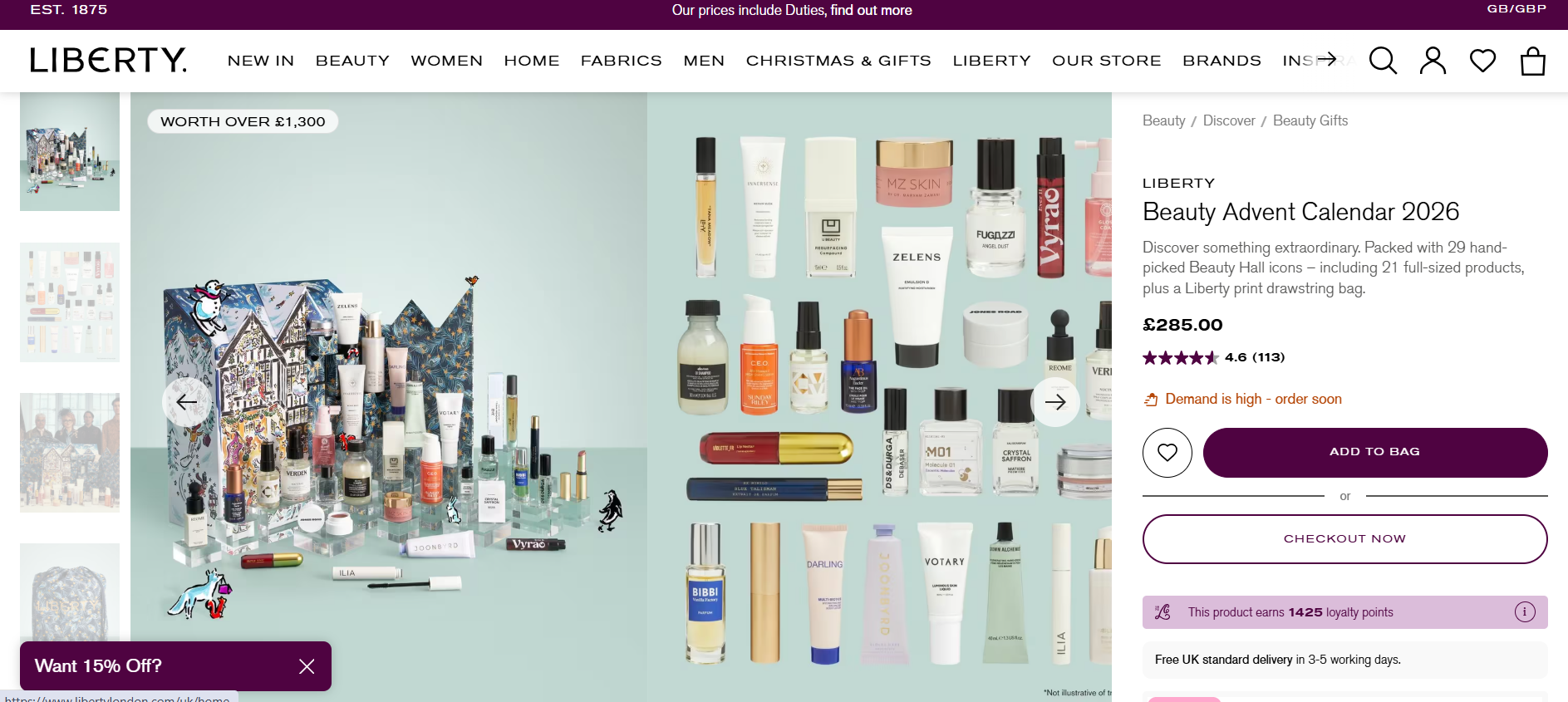
The calendar is sold at a single published price, and its sell-out record suggests demand does not depend on a markdown. Demand is created by the product itself: a defined release, a curated selection customers cannot assemble elsewhere, and a track record of selling out that encourages people to buy early rather than wait. It is worth being clear that the proposition leans heavily on perceived value, as the contents are worth far more than the price, and Liberty is a department store rather than a single brand. The principle still applies to DTC luxury: a genuinely limited, well-curated festive edition can give customers a reason to buy now that has nothing to do with a Black Friday discount.
This is not a Black Friday campaign, but it shows how a limited product moment can work without discounting. The rules are clear, the scarcity is real and the window is predictable, so customers anticipate it rather than feel manipulated by it. A luxury brand could apply the same thinking to
A useful question to ask: Does the product give the customer a reason to buy now that is meaningful beyond a promotional deadline?
If it does, the campaign can build on the brand's existing strengths instead of borrowing urgency from a sale.
6. Give customers a reason to choose your brand, not just your products
For some premium brands, Black Friday is an opportunity to reinforce the values that distinguish them from competitors.
That could mean highlighting craftsmanship, repair and care services, responsible sourcing, traceability or the people behind the products. A brand with a genuine charitable commitment might also dedicate a defined contribution from eligible purchases to a relevant cause.
The important point is that the activity needs to be credible and connected to the business. A charitable message introduced purely for Black Friday, without a clear commitment, can feel opportunistic. Likewise, sustainability claims should be specific and substantiated rather than used as a vague promotional device.
A current UK example is premium lifestyle brand TOAST. Through its TOAST Circle programme, it offers a free mending service, sells creatively repaired pieces through TOAST Renewed, runs clothes-swapping events and resells previously loved garments through TOAST Reworn, donating 10% of Reworn revenue to UK charity partner Traid. The brand reports that it has given 25,232 garments a second life since 2019. These are year-round commitments rather than a Black Friday tactic, which is exactly what makes them credible to highlight during a peak shopping period.
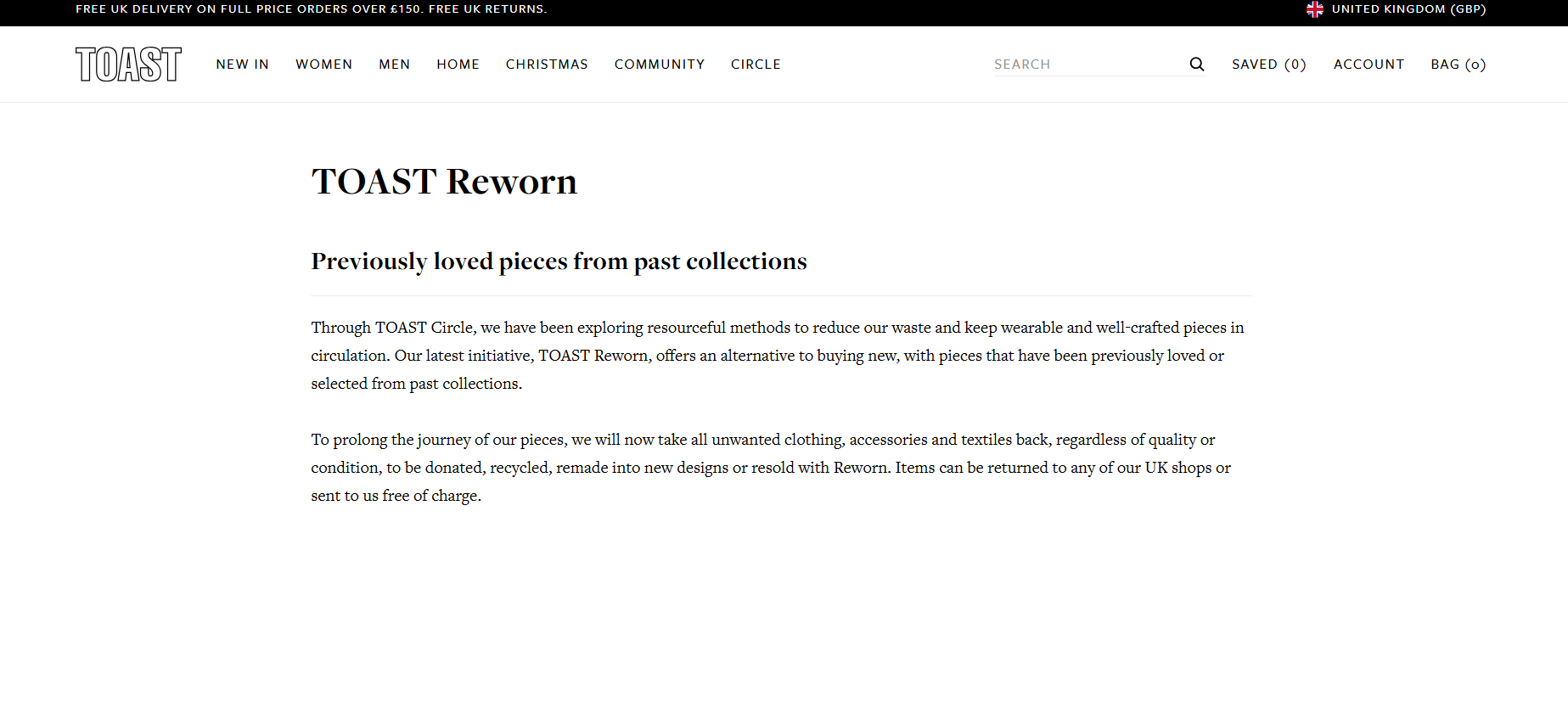
Consider what your customers value about the brand and how that can be made more visible during the shopping period.
This may not produce the same immediate response as a headline discount, and the outcome should be measured rather than assumed. But it can create a more distinctive campaign and give customers another reason to engage with the brand.
7. Make the Shopify experience support the strategy
A strong offer still needs an effective customer journey.
If your campaign relies on exclusive access, customers must be able to register and enter the event without confusion. If it centres on gifting, product discovery and delivery information need to be clear. If the incentive depends on a qualifying basket value, customers should understand the threshold and see their eligibility at the appropriate point in the journey.
These details are especially important during high-traffic periods, when a confusing interface or a poorly configured integration can create friction precisely when demand is strongest.
For brands on Shopify and Shopify Plus, preparation should cover the storefront, email automation, customer service, stock information and fulfilment communication. Check that product pages communicate the offer correctly, discount fields are not being displayed unnecessarily, and gift eligibility behaves as expected in the basket and checkout.
UK fitness apparel brand Gymshark learned the cost of an unprepared store the hard way. According to Shopify's published case study, its previous Magento (now Adobe Commerce) site took six to eight months to build, by which point the business had already outgrown it. On Black Friday the site went down for eight hours, costing the brand an estimated £100,000. Around ten months after adopting that platform, Gymshark moved to Shopify Plus, prioritising a setup that could scale with peak demand.
The same case study notes that Gymshark used Shopify Scripts to customise its checkout and surprise customers with free gifts to build loyalty. That is exactly the kind of basket and checkout logic a gift-led campaign depends on: the right gift added automatically, at the right threshold, without a discount code getting in the way. Shopify has since been moving this type of customisation from Scripts to Shopify Functions, so brands planning similar mechanics today should build them on the current tooling.
For a luxury brand choosing not to discount, that preparation is just as important. The campaign needs a clear proposition, reliable delivery and a shopping experience that makes the value easy to understand.
8. Measure success beyond the number of orders
A no-discount strategy should still have clear commercial objectives. The difference is that success should not be measured by revenue alone.
Depending on the campaign, useful metrics may include:
- Full-price revenue and contribution margin: Did sales grow without sacrificing product margin to a price reduction?
- Average order value: Did considered gifting or relevant qualifying thresholds encourage customers to build more valuable baskets?
- Customer acquisition and retention: Did the campaign attract relevant new customers or encourage previous customers to return?
- Email and SMS engagement: Did exclusive access generate registrations, qualified visits and meaningful purchases?
- Repeat purchase and customer lifetime value: Did the campaign contribute to relationships that continued after the event?
Compare results with an appropriate baseline and account for other factors that may influence performance, including seasonality, marketing spend, product availability and fulfilment costs.
It is also worth examining what happens after Black Friday. A campaign may generate strong immediate revenue yet produce little lasting value if it attracts customers who never return. Conversely, an early-access or gifting campaign may build a valuable audience whose purchases continue into the festive season.
The right measurement framework will depend on what the campaign is designed to achieve.
Black Friday should reinforce your brand, not redefine it
Luxury brands do not need to copy the discount-led playbook to participate in Black Friday. They need to understand what their customers value and build a campaign around it.
For some, that means early access to a limited collection. For others, it could mean considered gifting, personalisation, exceptional service or a more rewarding loyalty experience. The strongest approach is the one that creates a meaningful reason to buy while remaining consistent with the brand's positioning and commercial objectives.
That requires more than a clever email campaign. Product pages, customer data, automation, fulfilment and the wider Shopify experience all need to support the proposition.
WIRO helps ambitious DTC brands bring strategy, customer experience, Shopify development, integrations and conversion optimisation together to build eCommerce experiences that support sustainable growth.
Planning your next peak trading period? Explore WIRO's eCommerce audit services to identify customer experience improvements, technical issues and opportunities to make your Shopify store work harder for your business.